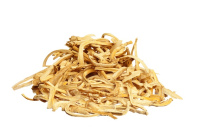
Shatavari - Asparagus racemosus
Plant species name: Asparagus racemosus
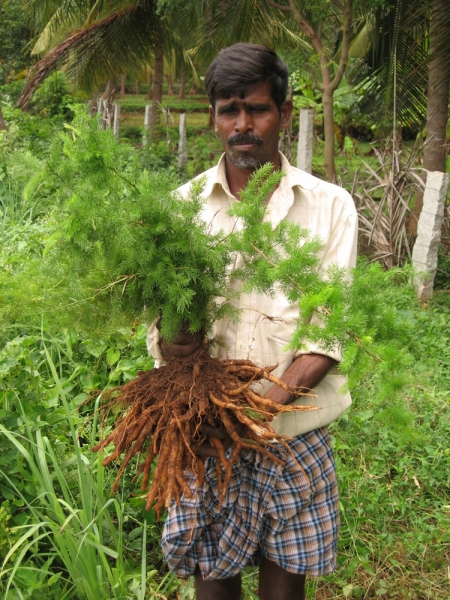
Name in Sanskrit: Shatavari
Other names: Shatamull – Shatamuli
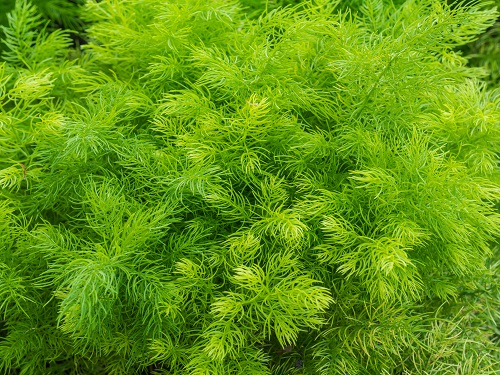
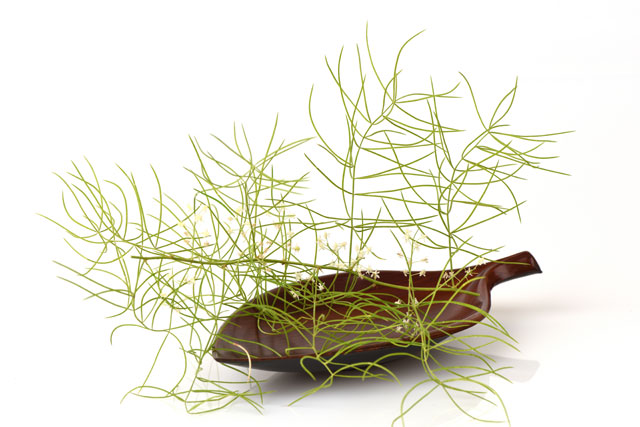
Asparagus racemosus, commonly known as "shatavari" is a variety of asparagus native to India and Sri Lanka. It also grows in parts of Africa and China. In the Ayurvedic tradition, Shatavari is considered as the main elixir of youth for the female body, just like ashwagandha (Witania somnifera) for the male one.
There are two interpretations of the translation of the name “shatavarita”. The first is “healer of a hundred diseases” (shat - hundred, vari - healer), in another version “vari” is translated as “spouse”, in this case - “having a hundred husbands”. The origin of the name is associated with the presence of numerous tuberous roots, which are the most valuable part of the plant.
In India, shatavari has been used for several thousand of years as a universal remedy for women's health. Basically, the root of the plant is taken to relieve premenstrual syndrome and menopausal symptoms, to increase libido and fertility, and to increase milk production in nursing mothers. In addition, shatavari is used as an anti-ulcer agent. A detailed overview of the potential and detailed composition of the plant can be found at the following links - 1, 2
At the moment, the composition of the plant is quite well studied, and the mechanisms of action are associated with the phytoestrogenic activity of the components. As for the various effects, some of them remain in question, while others are beyond doubt.
Traditional use
- as a tonic to increase libido and fertility in women, as well as to increase lactation;
- to normalize hormonal levels and reduce menopausal symptoms during and after menopause;
- as an agent that has a positive effect on the functioning and condition of the gastrointestinal tract;
- as a health and general strengthening agent, to improve the appearance of the skin and hair condition.
Detailed information
The roots of Asparagus racemosus contain a wide range of phytochemical compounds, the main biologically active components are considered to be a group of saponins known as “shatavarins” (shatavarins I-IV; VI-X), which show phytoestrogenic properties. In traditional medical systems, plants containing phytoestrogens are often recommended to reduce menopausal symptoms during and after menopause.
Phytoestrogens are plant compounds that are structurally similar to the most active female sex hormone Estradiol. Due to their structure, they can lead to a physiological response similar to the hormonal effects of estrogens, only much less active. Phytoestrogens perform this function by binding directly to estrogen receptors without increasing the level of endogenous (intrinsic) estrogen. At the same time, phytoestrogens can work not only as estrogens, but also as antiestrogens. In more precise terms, with a deficiency of estrogen, phytoestrogens will weakly activate receptors, but with an excess they will compete with estrogens for the receptor. This suggests that phytoestrogens may have a “balancing” effect, although this is still unclear fact.
Additionally, phytoestrogens are often included in cosmetic formulations. It is believed that they can improve skin elasticity and reduce the number of wrinkles. However unlike steroid hormones, phytoestrogens are not absorbed through the skin. In any case, phytoestrogens can be useful in cosmetics for problem skin and in anti-baldness products as antioxidants and as inhibitors of the enzyme that stimulates sebum production.
Can taking Shatavari stimulate lactation?
The oldest treatise on Ayurveda, - Charaka Samhita, says that shatavari is a remedy that can increase the amount of breast milk. This property of the plant was evaluated during a clinical study in which 60 nursing mothers with so-called “lactation deficiency” took part. The result was assessed by measuring levels of the hormone prolactin, which is biochemically responsible for lactation. Taking the root supplement of Asparagus racemosus resulted in a more than threefold increase in levels of the hormone prolactin in the study group compared to the placebo – controlled group. 3
In according with another study, ten pregnant buffaloes were given a dietary supplement of Asparagus racemosus roots for several weeks and tested for hormones and milk production then. Buffaloes fed Asparagus racemosus showed significantly higher plasma prolactin concentrations and produced more milk than buffaloes in the control group. 4
However, despite the fact that this plant is traditionally used to increase lactation in nursing mothers, there are general recommendations not to take herbal medicines during pregnancy or lactation!
What Science Says
The effect of Asparagus racemosus extract was studied in dysfunctional uterine bleeding. Seventy women in the age group of 20-45 years took part in the experiment. 63 women have got normalized their menstrual cycle by the end of the treatment. In according with another study, a group of 40 women suffering from dysmenorrhea and premenstrual syndrome (PMS) were completely relieved of their adverse symptoms. However, no changes in serum estrogen and progesterone were recorded. These data confirm that phytoestrogens do not affect the level of endogenous (own) estrogen. 5, 2
When conducting laboratory experiments in vitro on cell cultures, it was noted that the components of Asparagus racemosus are able to increase the activity of protective cells of the immune system (natural killer cells - NK cells), which perform cytotoxic functions. The authors of this study conclude that this may be one of the mechanisms underlying the plant's action. 6 The results of the following study indicate that saponins of the plant, particularly shatavarin IV, demonstrate significant antitumor activity in vitro. 7
Directions for use and dosage
It is taken in capsule form, 3-5 capsules once or twice a day (3-6 grams per day) before meals or an hour after meals. It is recommended to take courses of 14-20 days with breaks of 30-60 days. The plant is non-toxic and no side effects were observed when taking it.
Contraindications
Individual intolerance. Pregnancy. Lactation. Despite the fact that in India this plant is used to increase lactation in nursing mothers, there are general recommendations not to take herbal medicines during pregnancy or lactation. In case of an upcoming surgery, it is recommended to stop taking all herbal medicines two weeks in advance.
Biochemical composition
Chemical analysis of Shatavari roots revealed a group of steroidal saponins - shatavarins VI-X, together with the already known group of saponins - shatavarin 1 (or asparoside B), shatavarin IV (or asparinin B), shatavarin V, immunoside and schidigerasaponin D5 (or asparanin), as well as, sarasasapogenin and aspargamine additionally.
Sources of information, research and references:
Please note that some studies are based on preclinical testing in biological models (in vitro). In studies involving model organisms, including humans, only isolated forms of active substances are used. Finally, some of the studies show conflicting data. Thus, extrapolation of the results to a human biological model is possible only in general terms, and sometimes is not possible at all. This information should not be used to evaluate health conditions and the products sold here are not drugs and are not intended to treat or prevent any disease.
Date of publication: 08/08/2024
© 2024 Hello-Botanica. All rights to publication belong to the copyright holders. When copying material fully or partly, a reference to the original source is required.