


Brahmi - Bacopa monnieri
Plant species name: Bacopa monnieri - Bacopa monnieri
Name in Sanskrit: Brahmi - Brahmi
Other names: Coastal Waterhyssop
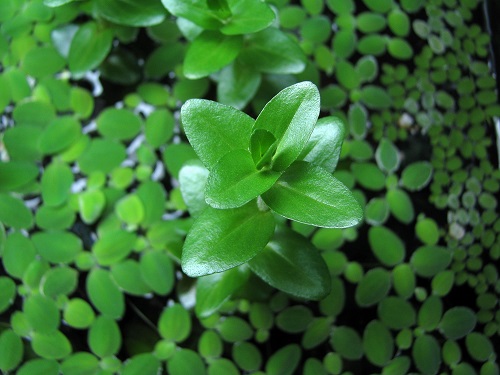
Bacopa monnieri is a perennial creeping plant with white flowers and bright green leaves. It grows in shallow water, both fresh and salt water. Its native habitat is India and Sri Lanka. Bacopa monnieri, or as it is called in India - Brahmi (Brahmi), is one of the main means used in Ayurvedic practice to stimulate mental activity, as well as for memory disorders. Translated from Sanskrit, "Brahmi" means "promotes knowledge of Brahmin." In India, Brahmins are a class that adheres to intellectual spheres of activity, mainly priests, scientists, officials and teachers. There is information that Brahmi was taken by ancient Vedic scholars to better remember long sacred hymns and sacred scriptures.
There is another well-known plant with very similar properties - Gotu kola (Centella asiatica), which is often called Brahmi. It is believed that in the 16th century the names were confused and the correct Ayurvedic name for Gotu kola is Mandukaparni (Mandukaparni), and Brahmi is Bacopa monnieri.
Ayurveda texts describe a group of plants that contain “brain-friendly nutrients” that are used to enhance cognitive abilities and improve mental health. This group of plants is classified as “Medhya Rasayana.” “Medha” means intelligence, and the term “Rasayana” means knowledge of ways to maintain physical and mental health.
Other well-known plants in this category are Gotu Kola (Centella asiatica) and Shankapushpi (Evolvulus alsinoides). All of these herbs are used, both together and separately, as natural remedies for improving memory and other cognitive functions. They are used for maintaining performance during periods of increased mental stress. 1 2 They are also used to restore hearing and to reduce psychological dependence in smoking and alcoholism.
Traditional use
- to improve cognitive functions such as memory, concentration and learning ability;
- as a tonic to maintain performance during periods of intense mental stress;
- to stabilize the emotional state.
Detailed information

It is believed that Brahmi can improve memory processes, concentration and learning ability, it can also speed up the recovery of brain function after traumatic brain injury. The effect of stimulating mental activity when taking Bacopa monnieri, described in Ayurvedic texts, has now been confirmed experimentally. 3
It has been established that the plant contains a group of triterpene saponins, which are called bacopasaponins. These include two groups of phytochemical compounds called - Bacoside and Bacopasides. It is assumed that they can stimulate metabolic processes in the brain - blood circulation and oxygen supply to the brain. Whereas this can have a beneficial effect on mental activity and emotional state. 4, 5
Antioxidant activity
Bacopa monnieri components demonstrated significant antioxidant activity in vitro experiments. Antioxidants reduce the amount of free radicals - active forms of oxygen that damage cells by oxidizing their components, which, to a certain extent, can slow down the aging process of the body and reduce the likelihood of developing age-related chronic diseases.
Directions for use
It is taken in the form of capsules, 4-5 capsules per day, or traditionally as a dry powder dissolved in a small amount of water or milk, 0.5-1 teaspoon once or twice a day, before meals or an hour after meals. Sometimes ginger, lemon, cinnamon, mint or honey can be added to taste. It is recommended to take courses of 30-60 days with breaks of 30-60 days.
Brahmi is also used externally as a means of strengthening hair. A few spoons of powder are poured with warm water and stirred until a thick cream is form. After that let it brew for 5-10 minutes. Then apply to the head skin and leave for a while. This procedure is repeated once a week. The same mask can be used for facial skin care.
Contraindications and side effects
Individual intolerance, pregnancy, lactation. Large quantities can cause stomach upset, weakness, nausea and dry mouth. Potentially, Brahmi can increase the production of thyroid hormones produced by the thyroid gland, so it is not recommended to take this plant for hyperthyroidism and should not be combined with drugs that affect its function. In case of an upcoming surgery, it is recommended to stop taking any herbal preparations two weeks in advance.
Phytochemical composition
Alkaloids - brahmine and herpestine, bacopasaponins - bacoside A,B, Bacopaside II - XI; saponins - monerin, hersaponin; flavonoids - luteolin and apigenin. In addition, betulinic acid, stigmasterol, beta-sitosterol are contained in significant quantities.
Sources of information, research and references:
Please note that some studies are based on preclinical testing in biological models (in vitro). In studies involving model organisms, including humans, only isolated forms of active substances are used. Finally, some of the studies show conflicting data. Thus, extrapolation of the results to a human biological model is possible only in general terms, and sometimes is not possible at all. This information should not be used to evaluate health conditions and the products sold here are not drugs and are not intended to treat or prevent any disease.
Publication date: 09/07/2024
© 2024 HelloBotanica. All rights to publication belong to the copyright holders. When copying material fully or partly, a link to the original source is required!

