


Cat's-Claw - Uncaria tomentosa
Plant species name: Uncaria tomentosa - Pubescent uncaria
Other names: Cat's claw, Una de Gato
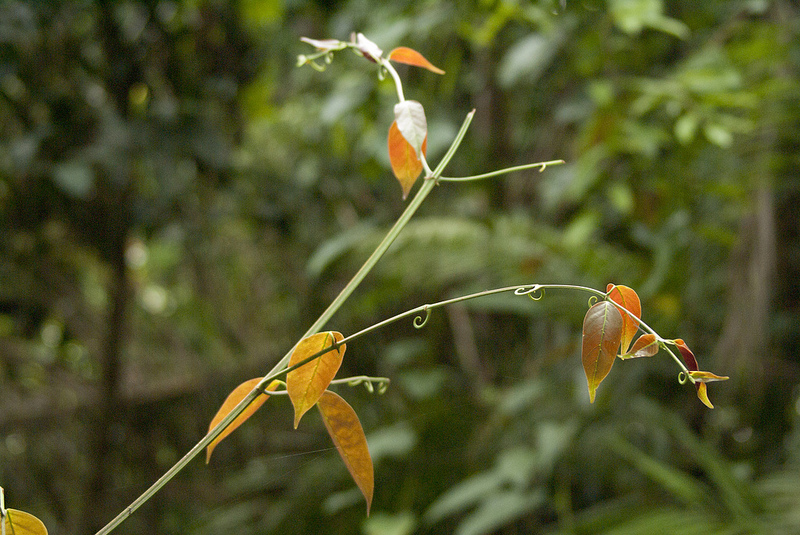
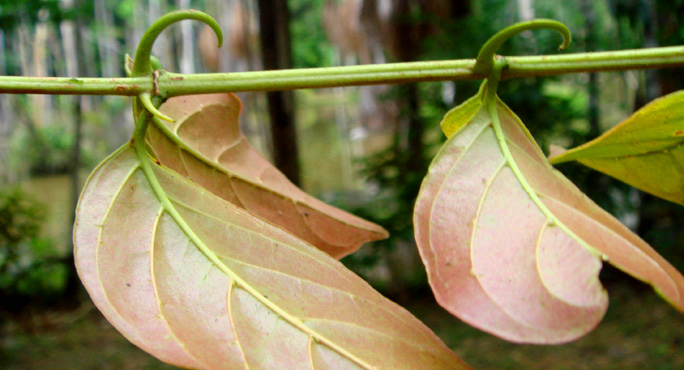
Uncaria tomentosa or "Cat's Claw" is a tree vine that grows in Central and South America, mainly in the tropical forests of the Amazon. It gets its name from the claw-shaped thorns with which it clings to tree branches and trunks.
The plant is considered as a panacea and has been used for thousands of years to improve overall health. The indigenous population of the Amazon consider this vine as sacred. It explains its various therapeutic properties. In the West, this plant became known in the 70s of the last century, when the German researcher Dr. Klaus Keplinger brought samples of cat's claw to Germany. Since then, several unique compounds have been discovered in the plant that can stimulate the activation of the immune system and suppress the production of inflammatory mediators.
In recent years, food supplements containing cat's claw have become extremely popular in the West and the market demand for it has increased significantly. In this regard, the Peruvian government has stepped up measures to protect this species and has prohibited the collection of roots and parts of the vine that grow below three feet above the ground. So the remaining parts of the vine remain viable, it continues to grow actively and can be collected again after a few years.
Probable action of biologically active substances
- immunomodulatory, antitumor, antioxidant - increases the body's immune potential, reduces oxidative stress;
- antibacterial, fungicidal (antifungal), antiulcer;
- hypotensive - lowering blood pressure;
- anti-inflammatory, decongestant, vasoconstrictor.
Traditional use
- as a healthful and tonic agent, as well as for increasing the body's resistance to stress;
- to reduce inflammatory processes in the joints and periarticular tissues, urinary tract or prostate gland;
- to strengthen the walls of capillaries and veins, to reduce the risk of thrombosis, varicose veins and hemorrhoids;
- to reduce the risk of developing cancer, as well as to increase the tolerance of cancer patients to the side effects of chemotherapy.
Detailed information
Cat's claw is best known for its immune-boosting properties. Keplinger was the first scientist to note that cancer patients taking cat's claw in combination with chemotherapy and radiation were suffering less from side effects, including hair loss, weight loss, nausea, secondary infections, and skin problems. Several laboratory studies have shown that Cat's Claw extract promotes DNA repair and may help to prevent the loss of white blood cells and immune damage caused by chemotherapy drugs.
The plant contains a group of pentacyclic oxindole alkaloids (POA), which have a stimulating effect on the immune system through the activation of protective cells such as phagocytes, T & B-lymphocytes, whose function is to cleanse the body of foreign microorganisms, bacteria, remnants of dead cells and other harmful particles. 1, 2, 3
Properties of Cat's Claw
Cat's claw is known for its anti-inflammatory properties and is often used against inflammation of the joints, urinary tract, or prostate gland. One of the most studied components with anti-inflammatory properties is the alkaloid - mitraphylline, which is active against a wide range of cytokines involved in the inflammatory process. 4 It is believed to have cytotoxic properties and may have antitumor effects. 5, 6 What interesting is that this same alkaloid is found in the leaves of the Mitragyna speciosa, commonly known as "kratom" (BOTANICA recommends!!!).
The next study looked at the ability of cat's claw to protect and regenerate cartilage, the tissue that acts as a shock absorber for the joint surfaces of bones. Cartilage loss is a defining characteristic of osteoarthritis, and occurs when the breakdown of cartilage outpaces its regeneration. Forty-five patients with osteoarthritis of the knee were included in the study. Within a week of starting to take cat's claw extract, both doctors and patients reported significant improvements in their condition, with less pain, inflammation, and swelling. 7
Active materials
The plant vine contains two main groups of active ingredients - pentacyclic oxindole alkaloids (POA) and tetracyclic oxindole alkaloids (TOA). TOA-free cat's claw supplements have appeared on the market in recent years. Their manufacturers say that TOA negates all the beneficial properties of another group of alkaloids in this plant - POA. However, there is no scientific evidence to support this claim, or any published independent studies confirming the harm of TOA. On the contrary, most independent studies have shown that both fractions of oxindole alkaloids enhance immune function, even when used in relatively small quantities.
According to most researchers, the benefits of cat's claw consist in the complex effect of all active substances. Another obvious confirmation of the effectiveness of the whole vine of the plant is its successful centuries-old use by the indigenous population of South America, because this is what attracted the attention of researchers and scientists to this vine. 8, 9
Antioxidant activity of the plant
Laboratory tests have shown that cat's claw has a superior antioxidant effect to many fruit, vegetable, cereal and medicinal plant extracts. The plant contains a high concentration of polyphenolic compounds classified as procyanidins. These compounds are considered to be much more powerful antioxidants than vitamins C or E. According to the modern free-radical theory of aging, antioxidants reduce the amount of free radicals and prevent cellular damage. That slows down the aging process of the body to a certain degree and reduces the likelihood of developing age-related chronic diseases.
Directions for use and dosage
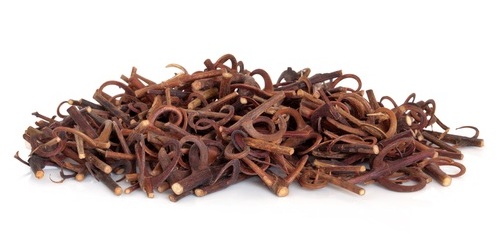
Cat's claw is used in the form of capsules, 2-3 capsules or traditionally, in the form of dry powder dissolved in a small amount of water or milk, 0.5-1 teaspoon once or twice a day, before meals or an hour after meals, sometimes ginger, lemon, cinnamon, mint or honey can be added to taste. Another common method is brewing with boiling water: 1-2 teaspoons per glass of water, infused for 5-10 minutes and taken several times a day. Sometimes lemon juice or vinegar could be added to the water. Half a teaspoon per glass of water helps to extract more alkaloids from the bark. It is also taken in the form of extracts. An alcohol tincture in a ratio of 1:4, which is infused for about 2 weeks, is also considered effective. It is recommended to take courses of 14-21 days with breaks of 30-60 days.
Contraindications
Individual intolerance. Pregnancy. Lactation. Cat's claw is believed to activate the immune system, so it should not be used together with medications intended to suppress the immune system, and its use is also contraindicated after or before organ transplant operations. Cat's claw is not recommended for people with low blood pressure and kidney failure, as well as for people with autoimmune diseases (lupus or multiple sclerosis).
Contraceptive properties of cat's claw have been documented when taken in large quantities, so the plant is contraindicated for both pregnant women and women trying to conceive. At the same time, this plant cannot be considered a reliable contraceptive. Studies have also shown that components of cat's claw can reduce platelet aggregation and thin the blood. In case of upcoming surgery, it is necessary to stop taking it at least two weeks in advance. Moreover, cat's claw contains tannins, which can cause stomach upset when taken in large quantities.

Phytochemical composition
Indole alkaloids: hirsutine (hirsutine), hirsuteine (hirsuteine).
Oxindole alkaloids: - Pentacyclic: pteropodine (pteropodine); isopteropodine (sopteropodine); uncarine (uncarine); mitraphylline (mitraphylline); isomitraphylline (isometrophiline); speciophylline (speciophiline).
Tetracyclic alkaloids: rhynchophylline (rhynchophylline); isorhynchophylline (isorincophylline); corynoxeine (corynoxeine); isocorynoxeine (isocorynoxeine).
Polyphenols - flavonoids; procyanidins - dimer procyanidins A1, B1, B2, B3, B4 (the bark of Uncaria tomentosa contains about 12% procyanidins)
Tannins, phenols, catechins, cis-epicatechin, sterols - about 60% of sterols - stigmasterol, campesterol, 5alpha-carboxystrictoside.
Polyhydroxylated triterpene, ursolic acid, oleanolic acid.
Sources of information, research and references:
Please note that some studies are based on preclinical testing in biological models (in vitro). In studies involving model organisms, including humans, only isolated forms of active substances are used. Finally, some of the studies show conflicting data. Thus, extrapolation of the results to a human biological model is possible only in general terms, and sometimes is not possible at all. This information should not be used to evaluate health conditions and the products sold here are not drugs and are not intended to treat or prevent any disease.
Date of publication: 07/30/2024
© 2024 HelloBotanica. All rights to publication belong to the copyright holders. When copying material fully or partly, a reference to the original source is required.

