


Guduchi - Tinospora cordifolia
Plant species name: Tinospora Cordifolia
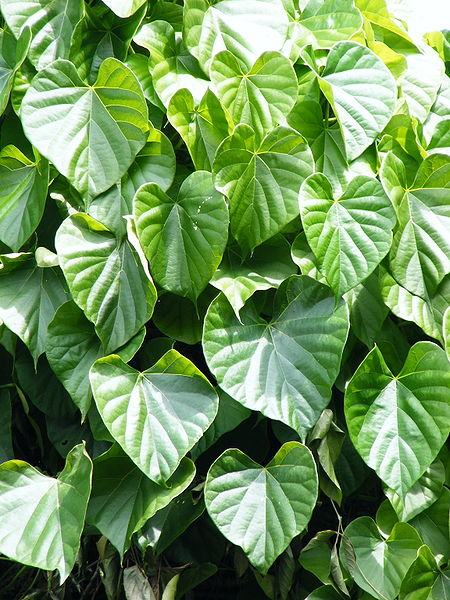
Name in Sanskrit: Guduchi (Guduchi), Giloy (Giloy).
Chinese Herbology: Xin Ye Qing Niu Dan
Other names: Amrita, Gulancha tinospora, Indian tinospora.
Tinospora cordifolia or, as it is also sometimes called, - "Guduchi" (Guduchi) is a widely known herbaceous plant in Asia. In Sanskrit, "Guduchi" means "that what protects your body." This vine has been used for several thousand years as a remedy that restores health and strength after illness. There is information that previously guduchi was used even against snake bites and poisonous insects, as well as for the protection from any infectious diseases such as fever, jaundice and dysentery. Moreover, Tinospora has traditionally been used as a natural remedy to improve memory and other cognitive functions.
Biological effect
- immunomodulatory, antitumor, antioxidant - increases the immune and regenerative potential of the body's cells;
- detoxifying - promotes accelerated elimination of toxic compounds from the body;
- anti-inflammatory, anti-allergic - reduces allergic inflammation of the nasal mucosa;
- hypoglycemic - insulin-like;
- hepatoprotective.
Traditional use
- as a health and general strengthening agent, as well as to increase the body’s resistance to stress;
- to detoxify the body;
- to balance sugar levels and “bad” cholesterol;
- to improve the condition of cartilage and joints (as well as anti-inflammatory);
- to improve liver condition;
- has antioxidant properties;
Detailed information
Recently, Tinospora cordifolia has been of great interest to researchers around the world due to the diverse properties of its components. A huge number of different compounds have been isolated from the plant, including alkaloids, polysaccharides, glycosides, plant sterols and triterpene lactones.
These groups of compounds may be responsible for the biological functions of the plant. In vitro, they have demonstrated immunomodulatory, anti-inflammatory, anti-allergic, anti-diabetic and anti-arthritic properties. Detailed information about the composition and potential of Tinospora cordifolia can be found in the following review article 1.
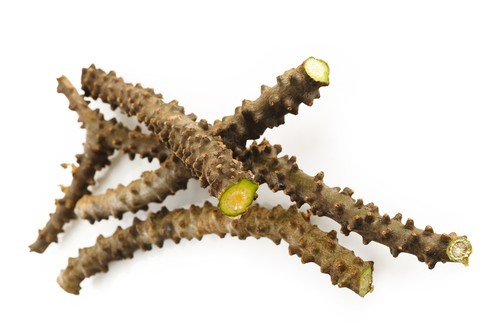
Tinospora and the immune functions of the body
Laboratory results have shown that at least 8 components of the plant may influence immune function. Some of them can affect the immune system by increasing the phagocytic activity of macrophages - cells whose function is to cleanse the body of microorganisms, bacteria and other particles toxic to the body. Synergistic effects of these compounds on their immunomodulatory activities have also been reported. 2
The potential effectiveness of some Tinospora compounds in reducing metastatic potential was noted when conducting in vitro laboratory experiments on cell cultures. When these components were used, markers of tumor development decreased. 3, 4 However, that does not mean this plant can be used to treat cancer or prevent its occurrence. The data is insufficient for making any recommendations and further research is needed besides.
General strengthening effect of Tinospora
The researchers also noted that the plant's constituents may help restore the physiological integrity of liver cells (hepatocytes) and increase their resistance to damaging influences. In particular, one of the plant alkaloids - berberine, has a particularly beneficial effect on the liver. This is a choleretic agent that is used against various diseases of the liver and gall bladder. It stimulates the formation and secretion of bile, relaxes the smooth muscles of the bile ducts reducing stagnation of bile in the gallbladder. In addition, berberine has many other benefits, in vitro, it suppressed the growth of certain types of tumor cells, normalized heart rhythm and balanced blood glucose levels. It is probably because of its berberine content that this plant is widely used in India for diabetes.
It is traditionally believed that taking Guduchi can stimulate metabolism and promote accelerated elimination from the body of toxic compounds that can accumulate due to metabolic disorders and poor nutrition. It is hypothesized that several components of the plant may stimulate the activation of protective cells of the immune system, whose function is to absorb foreign microorganisms or particles. In addition, the plant contains phytosterols and polysaccharides, which have numerous beneficial properties. Phytosterols suppress the absorption of cholesterol from the digestive tract and improve its excretion from the body, polysaccharides activate the growth of probiotic (non-pathogenic) intestinal microflora. They are a source of nutrient medium for positive bacteria, which suppress the development of pathogenic microorganisms and synthesize some amino acids and vitamins.
Anti-inflammatory effect
Guduchi is traditionally used for arthritis and osteoporosis. It is believed that the plant may help maintain healthy cartilage in joints. In vitro cell culture experiments have demonstrated the ability of certain plant constituents to stimulate the growth of osteoblastic cells responsible for the synthesis of proteins in the intercellular substance of bone tissue (bone matrix) and restore the thickness of articular cartilage.5 Loss of cartilage is a defining characteristic of osteoarthritis and occurs when the cartilage is ahead of its regeneration.
Antioxidant properties
Tinospora contains a wide range of antioxidant compounds that protect the body's cells from the effects of free radicals and thus reduce oxidative stress. According to modern free radical theory, the body's aging process is accelerated by free radical reactions, and the body's antioxidant defense system can only partially prevent oxidative damage. The active substances of Tinospora enhance the activity of antioxidant enzymes and prevent cellular damage, which, to a certain extent, slows down the aging process of the body and reduces the likelihood of developing age-related chronic diseases. 1
Directions for use and dosage
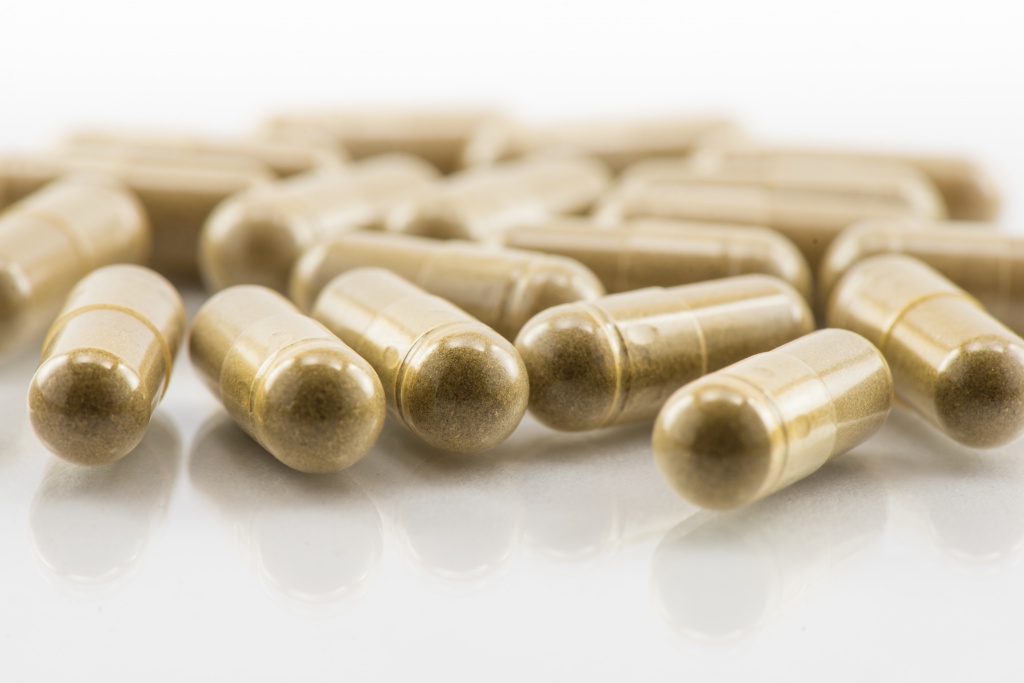
Tinospora is used in the form of capsules, 2-3 capsules or traditionally, in the form of a dry powder dissolved in a small amount of water or milk, 0.5 -1 teaspoon once or twice times a day, before meals or an hour after meals, sometimes ginger, lemon, cinnamon, mint or honey can be added to taste. It is recommended to take courses of 15-20 days with breaks of 30-60 days. The plant is non-toxic and no side effects were observed when taking it. Before taking any herbal medicines, consult your doctor.
Contraindications
Individual intolerance, pregnancy, lactation. In case of upcoming surgery, it is recommended to stop taking all herbal medicines two weeks in advance.
Phytochemical composition
The plant contains alkaloids (berberine, jatroricin, palmatine, magnoflorine); glycosides (giloin, cordifolioside A, magnoflorine, tinocordiside, syringin); phytosterols, diterpene lactones (11-hydroxymustakone, N-methyl-2-pyrrolidone, N-formylannonain), nitrogenous bases - choline, polyphenols and polysaccharides, including arabinogalactan and alpha-d-glucan.
Sources of information, research and references
Please note that some studies are based on preclinical testing in biological models (in vitro). In studies involving model organisms, including humans, only isolated forms of active substances are used. Finally, some of the studies show conflicting data. Thus, extrapolation of the results to a human biological model is possible only in general terms, and sometimes is not possible at all. This information should not be used to evaluate health conditions and the products sold here are not drugs and are not intended to treat or prevent any disease.
Publication date: 07/17/2024
© 2024 Hello-Botanica. All rights to publication belong to the copyright holders. When copying material fully or partly, a references to the original source is required.

