


Shallaki - Boswellia serrata
Shallaki - Boswellia serrata
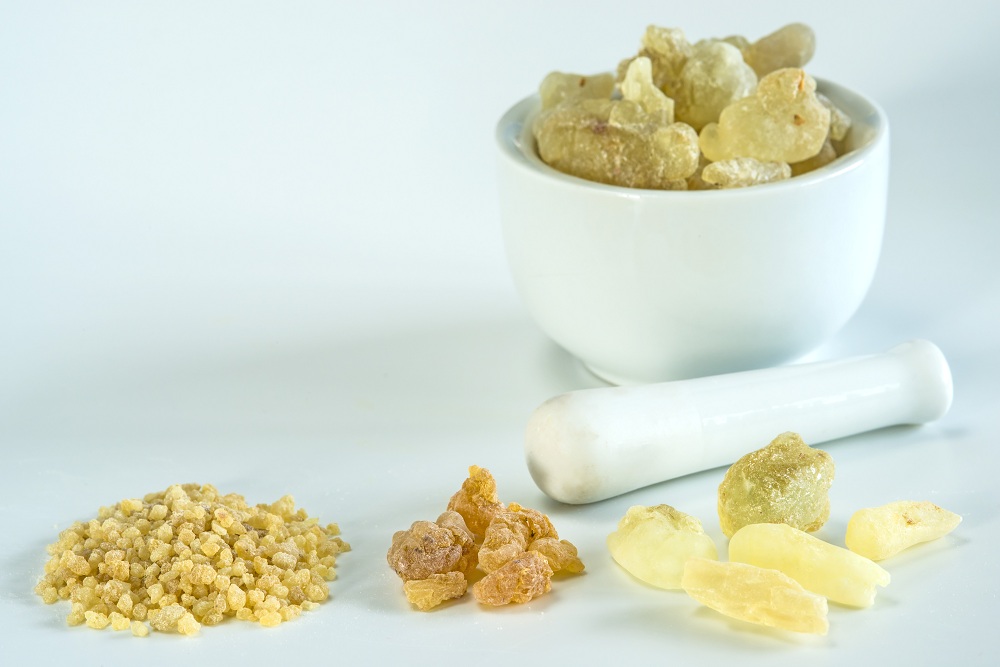
Name in Sanskrit: Shallaki - Shallaki
Other names: Boswellia Serrata, Indian Frankincense, Shallai guggul
Boswellia serrata is a tropical tree from the mountainous regions of India, whose beneficial properties have been known for several thousand years. The aromatic resin of boswellia, called "shallaki", is traditionally used to relieve inflammation in joints, cartilage or nerve - endings. Today, individual components or boswellia resin extract have been included in many anti-inflammatory drugs.
Traditional use
- as an anti-inflammatory agent for inflammation in joints, cartilage or ligaments, as well as for speeding up the process of their recovery;
- to improve skin structure.
Detailed information
It is assumed that the components that may have anti-inflammatory activity are so-called keto and beta (boswellic acid). The main mediators of acute inflammation leukotrienes (hormone-like substances) are synthesized in the body during inflammatory reactions, Probably boswellic acids can inhibit the synthesis of leukotrienes and prevent their inpouring into cartilage tissue and joint fluid. This, in turn, reduces the likelihood of further development of inflammation and helps reduce damage to the articular cartilage.

It is reported that boswellic acids can enhance microcirculation in joint tissues and have a vascular strengthening effect, as well as inhibit the release of lysosomal enzymes (hyaluronidase, elastase and collagenase), which destroy cartilage tissue. As a result, the processes of cartilage destruction may slow down, and restoration processes may intensify. 1, 2
What Science Says
When studying the effects of boswellia resin on patients with arthrosis (a degenerative disorder that often affects the knee joint), its effectiveness, safety and tolerability have been assessed by scientists. The experiment involved 30 patients with osteoarthritis of the knee joint. All patients reported about the decreasing knee pain, improving knee flexion, and better walking ability. The swelling of the knee joint has also decreased. There were no side effects. 3 Most studies have focused on the high safety of Boswellia resin.
Effect on skin
Boswellia resin is considered to be a suitable skin care product. For these purposes, boswellia resin is used externally in the form of masks or mixed with regular cream. L'oreal has patented the "Boswelox" formula created on the basis of boswellia resin using it in expensive creams for smoothing and lifting the skin.
In 2009, Italian scientists from the Dermatology Department conducted a study of the effect of bosswellic acids on skin photoaging. Photoaging is the process of skin damage from sunlight that usually occurs in parallel with the signs of age-related aging. Fifteen women applied boswellic acid cream to one side of the face once - daily for 30 days. Significant improvements were noted at the end of the period. The skin acquired a normal texture, fine wrinkles and excessive excretion of sebum decreased, elasticity increased, and echographic parameters changed. No side effects were observed. 4
Directions for use and dosage

Shallaki is taken in the form of capsules, 1-2 capsules once or twice a day, before meals or an hour after meals. It is recommended to take courses of 20-30 days with breaks of 30-60 days. The plant is non-toxic and no side effects were observed when taking it.
Contraindications
Individual intolerance, pregnancy, lactation. It is believed that boswellia resin does not demonstrate any side effects when taken, the plant is not toxic and has no negative consequences when used wisely, but may be contraindicated in case of individual intolerance to certain components. In case of upcoming surgery, it is recommended to stop taking all herbal medicines two weeks in advance.
Phytochemical composition
Boswellia serrata resin contains pentacyclic triterpene acids: b-boswellic acid, acetyl b-boswellic acid, acetyl -11-b-boswellic acid and up to 16% essential oils, most of which are alpha thujone and p-cymene.
Sources of information, research and references:
Please note that some studies are based on preclinical testing in biological models (in vitro). In studies involving model organisms, including humans, only isolated forms of active substances are used. Finally, some of the studies show conflicting data. Thus, extrapolation of the results to a human biological model is possible only in general terms, and sometimes is not possible at all. This information should not be used to evaluate health conditions and the products sold here are not drugs and are not intended to treat or prevent any disease.
Date of publication: 07/06/2014
© 2014 HelloBotanica. All rights to publication belong to the copyright holders. When copying material fully or partly, a link to the original source is required!


