


Ashwagandha - Withania somnifera
Plant pecies name: Withania somnifera
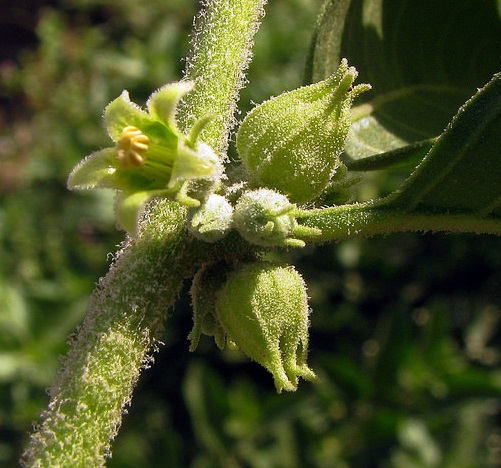
Name in Sanskrit: Ashwagandha
Other names: Indian ginseng, poison gooseberry, winter cherry
Ashwagandha has become widespread and is a well-known adaptogen. The roots of the plant have tonic properties and can be used to increase physical performance and reduce emotional stress, while being a safe remedy with no side effects. Ashwagandha extracts are included in sports supplements to improve physical fitness. In Ayurvedic practice, the roots of the plant have been used for several thousand years to stimulate sexual function in men, namely, to increase potency and fertility. Translated from Sanskrit, “ashwagandha” means “having the smell of a horse”, probably due to the peculiar smell of the dry root. The same plant is also known as “Indian ginseng”. However, ashwagandha does not act like ginseng, whose stimulant effect can cause anxiety. The peculiarity of ashwagandha consists of its tonic effects together with a feeling of emotional relaxation.
Traditional use
- as a tonic to increase resistance to physical and mental stress;
- to stimulate sexual function in men increasing potency, sexual activity and fertility;
- to stabilize the emotional state of depression or anxiety;
- to increase the duration or improve the quality of sleep.
Detailed information
Anti-stress effect
Regardless of the fact that ashwagandha has a tonic effect, it does not increase blood pressure and does not cause insomnia, but on the contrary, it promotes falling asleep faster and deeper. Long-term use of ashwagandha (30-60 days) stabilizes the emotional state under various stress, anxiety or depression. The experimental evaluation of the effectiveness of ashwagandha for reducing stress, anxiety, and restlessness in adults was conducted comparatively recently. The results showed that the components of ashwagandha significantly increased an individual's resistance to stress and improved the assessment of quality of life. There was a decrease in all stress rating scales compared to the placebo-treated group. Serum levels of the stress hormone - cortisol were also significantly reduced. 1
Ashwagandha as an aphrodisiac
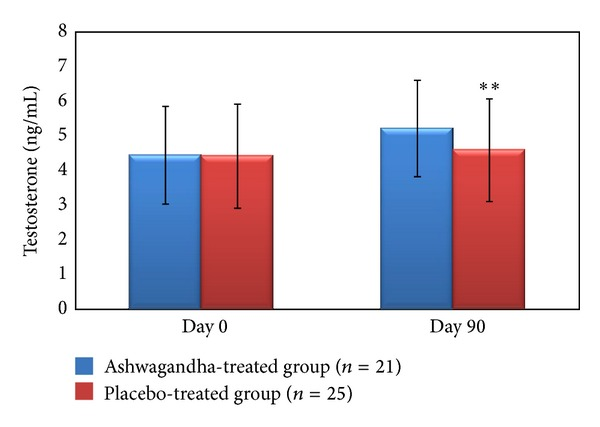
In India and China, tonic plants that “increase vital energy levels” are often used as aphrodisiacs. Ashwagandha is obviously the most famous plant used in Ayurvedic practice to increase potency, sexual activity and fertility. Studies on volunteers show that with regular use of ashwagandha, testosterone secretion increases, semen volume increases and sperm cells become more motile. 2
As for erectile function specifically, there have been no published scientific materials confirming the effectiveness of ashwagandha for erectile dysfunction for today. At the same time, it is testosterone that has a direct effect on sexual behavior, and its low level is considered as the main cause of erection problems. Among other things, ashwagandha can have a positive effect on sexual performance due to its anti-stress effect.
Reproductive hormone levels and spermatogenesis
Most clinical and experimental studies that have been conducted to evaluate the effect of active substances of ashwagandha root on reproductive hormone levels and spermatogenesis have reported a significant increase in sperm concentration and ejaculate volume, as well as a significant increase in testosterone (by 17%) and lutropin (by 34%) levels in comparison with the initial level. A detailed review can be found at the following link - 2
Ashwagandha for women's health
Ashwagandha is not considered to be suitable for enhancing sexual function or fertility in women and does not demonstrate any estrogenic effects on the body. However, the plant increases the body's resistance to stress, normalizes sleep, reduces anxiety and restlessness at all stages of life in both genders.
Use as a sports supplement

It is believed that the active components of ashwagandha can increase the energy potential of the body and create a favorable hormonal background for the growth of muscle tissue and the reduction of fat. 3 It is reported that the steroidal lactones in the plant, (withanolides), can increase testosterone secretion and reduce secretion of сortisol. 1, 2
Moreover, they can increase the rate of oxygen consumption by cells, which activates aerobic energy production processes and increases the number of ATP, molecules formed as a result of glucose oxidation. The ability to obtain and assimilate oxygen from the air is considered in sports medicine to be a fundamental factor in determining an athlete's abilities and prospects for progress. This is the so-called indicator of the body's aerobic performance or VO2 max.
The following study made an assessment of the effects of active compounds in ashwagandha root and arjuna bark (Terminalia arjuna) on physical performance and endurance. Such variables as speed, absolute and relative strength, maximum oxygen consumption and blood pressure in the human body were assessed. The subjects were divided into four groups: I - Withania somnifera; II - Terminalia arjuna; III - Withania somnifera + Terminalia arjuna; IV - Placebo control group. Dosage was 500 mg of extract daily.
After 8 weeks the groups I and II showed an improvement in the following parameters: strength, endurance and neuromuscular coordination, as well as a significant increase in the rate of oxygen consumption (VO2 max). When taking the combination, group III showed an even more significant improvement in all parameters. There were no significant changes in any of the variables in the placebo - treated group. There were no side effects recorded. 4
Anti-inflammatory effect
In India, Ashwagandha is often taken to strengthen bones, as well as relieve inflammation and joint pain. The effectiveness of plant components was confirmed experimentally for various joint inflammations. 5, 6
Active substances of Ashwagandha

The main biologically active substances of ashwagandha are alkaloids, the most famous of which are anaferin, anagigrin, isopeliethierin, as well as steroidal lactones called withanolides (withanolide), from the generic name withania. They are withaferin, somniferin and withanone. In vitro experiments on cell cultures, withaferin has demonstrated high antimetastatic activity. 7, 8, 9, 10
Directions for use and dosage
Ashwagandha is used in the form of capsules, 2-3 capsules or traditionally, in the form of a dry powder dissolved in a small amount of water or milk, 0.5-1 teaspoon once or twice a day, before meals or an hour after meals, sometimes added ginger, lemon, cinnamon, mint or honey can be added to taste. To normalize sleep, take it in the evening. It is recommended to take courses of 30-60 days with breaks of 30-60 days. The plant is non-toxic and no side effects were observed when taking it.
Contraindications
Pregnancy. Lactation. It is believed that ashwagandha does not have any side effects when taken, the plant is not toxic and has no negative consequences when used wisely, however, it may be contraindicated in case of individual intolerance to certain components. In case of an upcoming surgery, it is recommended to stop taking any herbal medicines two weeks in advance.
Phytochemical composition
Ashwagandha contains:
- Alkaloids such as anaferin, anagigrin, isopeliethierine;
- Steroidal lactones called withanolides - withaferin, somniferin, withanone, bysanin, withanin and withamosin;
- Amino acids – glycine, cystine, alanine, tryptophan, glutamic acid;
- Saponins, oligosaccharides, glycosides, phytosterols - beta-sitosterol.
Sources of information, research and references
Please note that some studies are based on preclinical testing in biological models (in vitro). In studies involving model organisms, including humans, only isolated forms of active substances are used. Finally, some of the studies show conflicting data. Thus, extrapolation of the results to a human biological model is possible only in general terms, and sometimes is not possible at all. This information should not be used to evaluate health conditions and the products sold here are not drugs and are not intended to treat or prevent any disease.
Publication date: 06/07/2024
© 2024 HelloBotanica. All rights to publication belong to the copyright holders. When copying material fully or partly, a link to the original source is required!

